On the crisis of representation
The West has a very special relationship with authenticity. The cult of the original, the unique, the genuine, the unbroken has a long tradition. The unique work of art, the singular object, the eye as a mirror of the soul, the voice as an unmediated self-expression are signatures of this cult. This is different in non-Western cultures. Religions such as the Ethiopian Orthodox faith do not recognise any difference between the original and the copy when it comes to sacred objects. Why should they? If the Ark of the Covenant, the chest containing the two stone tablets with the Ten Commandments, is regarded as a symbol of God’s covenant with the people of Israel and therefore as sacred, there is no reason for believers to assume that only one copy of it exists, i.e. the one that Moses brought back from Mount Sinai. Rather, every chest with two stone tablets inscribed with the Ten Commandments can be regarded as a sacred representation of that Mosaic Ark of the Covenant. Faith cancels out the difference between original and copy.
Already this example shows that ‘authenticity’ is a social construct, an attribution by society. It measures the degree of a specific social recognition granted to a person or an object. Performative acts or products of an original genius are thus subject to the cycles of recognition and their ups and downs over time. The painting “The Man with the Golden Helmet” illustrates this evolution. It was long regarded as a work by Rembrandt until doubts about this assumption arose in the 1970s. Since 1986, it has been regarded as a product of Rembrandt’s workshop and has accordingly lost much of its value on the art market, regardless of the quality of the work. Even if the term ‘cult’ may be seen as disturbing because of its religious connotations, anyone who believes in the authenticity of a person or a work is merely revealing that they believe that such a thing exists.
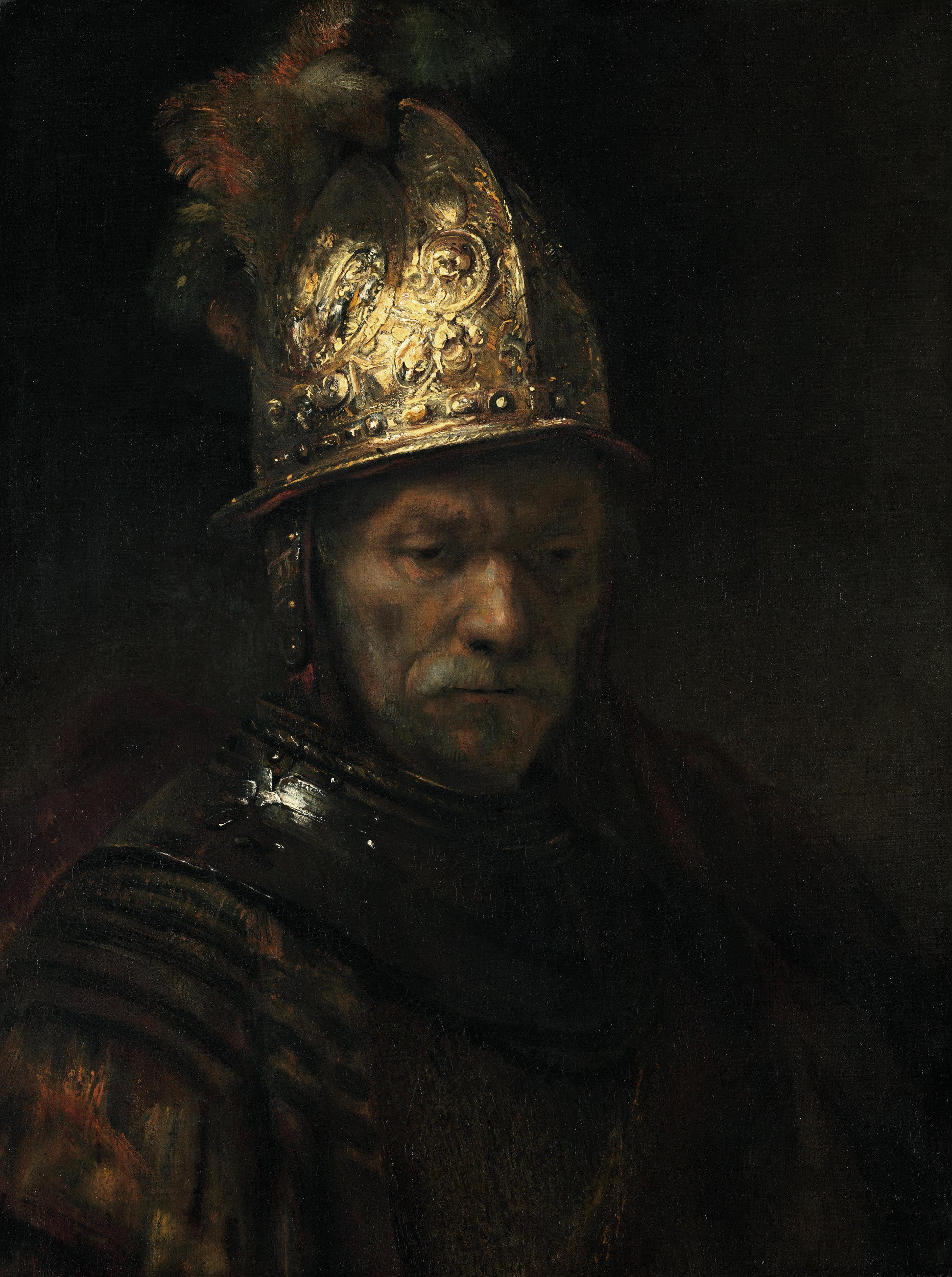
The Man with the Golden Helmet. Staatliche Museen zu Berlin, Gemäldegalerie. Public Domain Mark 1.0
Circle: Rembrandt Harmensz van Rijn (1606–1669), Painter
Photography is also ascribed qualities of authenticity. Even the highly reflective and critical Susan Sontag stated in her 1977 essay “In Plato’s Cave”: “Although there is a sense in which the camera does indeed capture reality, not just interpret it […].” The phrase ‘there is a sense’ refers to the fact that there was once a time when light rays hit a light-sensitive layer on which silver bromide had been applied. During subsequent fixing in the photo lab, the unexposed silver halide grains are washed out; what remains is something that was long regarded as a reproduction of reality, at least as long as there were films and thus physical carriers of any kind of a light-sensitive layer. However, with the advent of a new technology, digital photography, this view became obsolete, at least from a technical point of view. Since then, only metadata can clarify whether a digital photo is the result of an authentic photograph of a real situation or whether it is a synthetic product created using image processing software. The latest technical developments in this area, text-to-image generators such as Stable Diffusion, DALL·E or Midjourney, relegate the difference between authentic recording and synthetic generation of digital images to the realm of (film)theory. Consequently, not even experts can recognise the difference between a depiction of reality and the products of generative AI. In April 2023, a photographer won a prize at the Sony World Photography Awards with an AI-generated photo; the jury had deemed it an ‘authentic photo’. And in June 2024, a photographer won an “AI Image Contest” with a ‘real’ photo.
‘What are we to believe?’ This question arises again in times of generative AI. A new technology is once more triggering a true crisis of representation. In an information society, disinformation via synthetically generated content such as fake news, deepfakes, bots on social media or AI-generated reports of real events, such as in sports reporting, is causing massive uncertainty. The indistinguishability of synthetically produced and man-made content represents the central dilemma of the age of (dis)information. A crisis of representation has nevertheless occurred frequently in human history, namely whenever new media called into question what people recognised as ‘authentic’. During the First World War, for example, the rapid development of photography opened up new possibilities for remote sensing and cartography. While contemporaries were unsettled by this then new form of representation, as Paul Virilio describes in ‘Guerre et cinéma’, the data recorded directly on the ground through terrain exploration, which is used to analyse other data such as aerial photographs or satellite images, has since received a new term: “ground truth”. This term only once more reveals that the belief in what is considered to be ‘true’ and ‘authentic’ is a social convention. What is new about the current crisis of representation is above all its scale: generative AI, like any machine learning application, can scale its output at will if it is provided with the appropriate resources. Synthetically generated content is therefore able to flood the media world in which we now live to an unprecedented extent.
Unsurprisingly, this process is fuelling conspiracy theories and fears of being overwhelmed, ranging from the danger of vote rigging and the destruction of the contrast between true and false to the point of loss of a social construction of reality. In the current debates, however, obvious developments are being overlooked: While the excitement is primarily focussed on the inauthentic ‘falsification’ of reality, the very probable futures of a variation of reality are not (yet) anticipated. What term will we find, for example, for the synthetically generated target-group-specific formulation of political content in the sense of ‘targeted advertising’, and what term will we find for the (so far fictitious) example of a speech by the President of the European Commission that is broadcast in the 24 official languages of the EU, while all EU citizens know that Mrs von der Leyen does not speak all of them? See here already Jon Finger on Youtube…
We will therefore have to learn to deal with previously unknown variants of authenticity. And as in earlier times, there is a remedy for uncertainty: trust, understood as a social cement that creates belief in authenticity. From a social point of view, trust in people and institutions is such a remedy if trust is based on the experience of fulfilled expectations and consistent reliability. And technical remedies are guaranteed by procedures such as the International Standard Content Code, which guarantees both integrity at file level and authenticity at content level, by watermarks, electronic signatures or, with regard to photography, by the C2PA specification, which stores machine-readable evidence of provenance and authenticity in the metadata that accompany images and videos. However, remedies, or pharmaka, are the results of knowledge technologies that can be used to help and heal or, in the wrong manner or dosage, harm or kill. It therefore remains to be seen whether and how trust in people and institutions will work in the future.
Leave a Reply
Want to join the discussion?Feel free to contribute!